
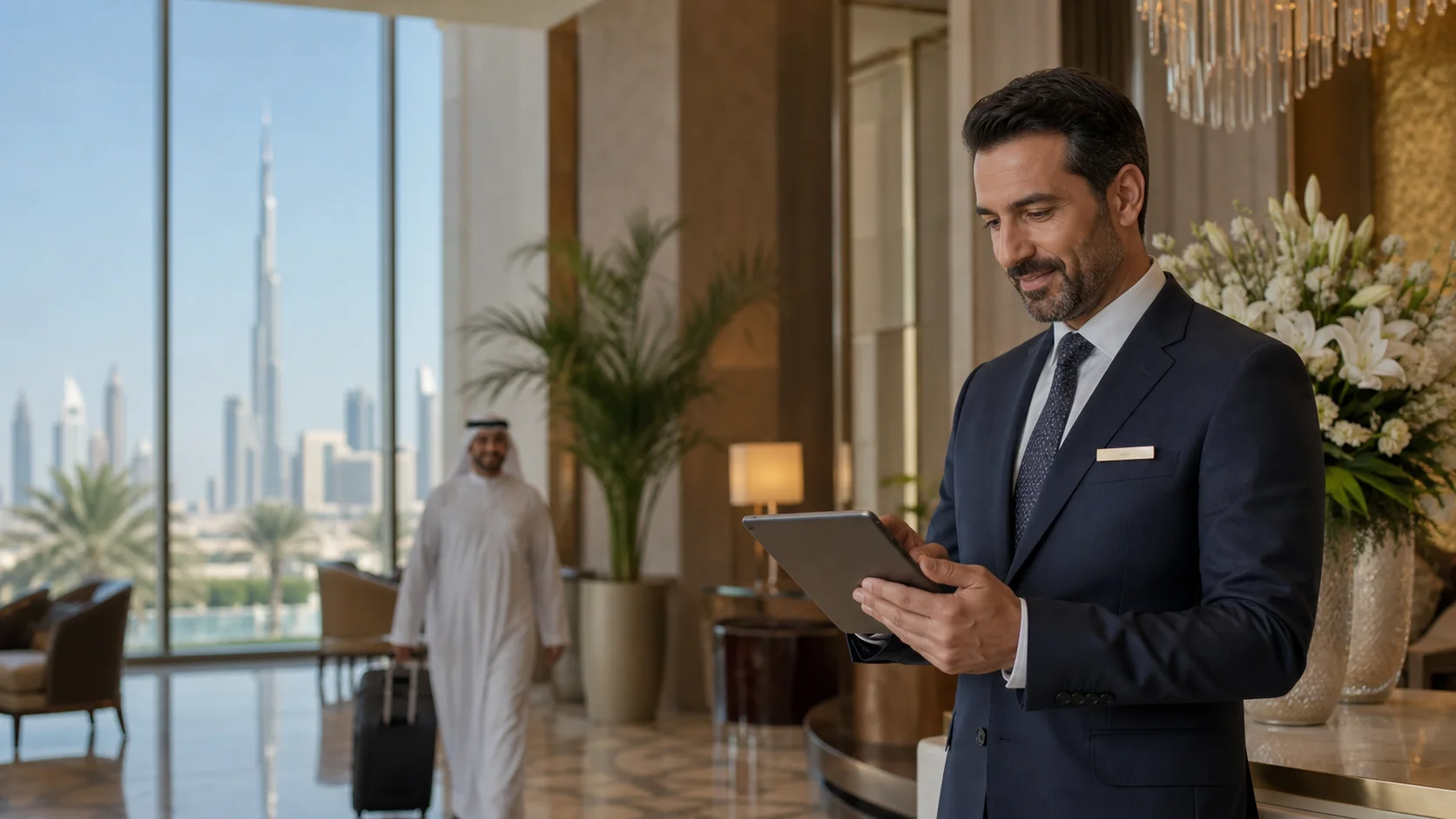
Hotel SEO in Dubai is not only about booking pages. It is about the entire guest path, from first search line to repeat stay. If your optimization only targets one room page, you miss demand that begins with curiosity, planning, and practical questions.
Most Gulf hoteliers still work in small silos. They publish rate pages, then write attraction content, then publish city guides separately. Guests do not visit in that order. They move through a sequence. Your content should reflect that sequence clearly.
Guest journey map as your SEO workspace
Set one map first. Put each step of the guest path in a row, then attach one or two pages to each step. The goal is not to have many pages. The goal is to have the right pages at the right moment.
Use this map layout:
- Dreaming: attraction and budget planning pages.
- Checking options: comparison and inclusion pages.
- Ready to book: clear rate and policy pages.
- Arrival prep: transport and check-in support pages.
- After stay: feedback and nearby suggestions.
Stage one: dream and discover
During this stage, visitors are not ready to pay yet. They ask where to stay, what to expect, and how much to budget. Build pages for each neighborhood, not only for each room type.
Examples for Dubai:
Example A: “Family stay near Dubai Marina” should compare pool access, stroller routes, and nearby supermarkets.
Example B: “Business travel in Jumeirah during Ramadan” should include co-working spaces, quiet check-in timing, and airport transfer options.
Example C: “Beachfront weekend stay under AED 500” should show clear price breaks and distance to the beach in minutes, not abstract promises.
Keep a “best for” block at the top of each discovery page: couples, groups, business, short stays, long stays. This reduces bounce and helps internal linking decisions.
Stage two: compare and trust
This is where many properties lose guests. Travelers compare breakfast plans, parking, check-in time, and cancellation conditions. Put direct answers in short blocks and link to one detailed page for each topic.
Useful blocks:
- What is included
- How to change a booking
- Parking details
- Shuttle availability
- Language support on site and phone
For Arabic users, mirror this structure in Arabic first, then adapt copy for English. Avoid machine-only translation, because “free breakfast” can become unclear when cultural context is missed.
Stage three: book and confirm
At this stage, booking must be fast. Put booking controls above the fold on mobile and desktop. Keep one visible rate callout and one “book now” button per room cluster.
Move these details to the top of the booking section:
- Room price by night
- What happens after payment
- Cancellation policy in two lines
- Support channel and response time
Update rates at least weekly, and in peak events every two days. A stale rate line can cancel a full SEO win in one hour of search visibility.
Stage four: arrive and use
Guests start with practical needs once they arrive. They search for gym timing, parking location, breakfast windows, and restaurant options. Create supporting service pages, each with one clear headline and a quick action.
Practical action pages:
- “How to find the hotel in Dubai after arriving” page with route links.
- “Airport pickup and drop-off guide” page with timings and contacts.
- “Room check-in checklist” page with FAQ and support WhatsApp.
These pages also help local traffic and mobile usability signals because they match what people are asking for at the moment they are on site.
Stage five: stay, share, and return
After checkout, the guest journey does not end. Most repeat traffic comes from post-stay search phrases like “late-night food near hotel” or “hotel gym open after 10 pm”. Keep one post-stay page per property cluster with nearby recommendations and a short review prompt.
Do not overuse review requests. Keep one calm link and one visible “share your visit” action. Authentic language and useful follow-up content outperform forceful prompts.
Guest path playbook for 30 days
- Week one: audit your top 30 pages and label each by journey stage.
- Week two: add missing “best for” blocks and booking clarity blocks.
- Week three: publish two Arabic and two English local guide pages for peak destinations.
- Week four: connect all pages with internal links and fix any page with unresolved break-off points.
By the end of month one, track these three outcomes: stage drop-off pages, repeat visits from post-stay content, and mobile booking clicks from comparison pages.
Practical examples for mixed portfolio hotels
Example: budget-focused property: use one discovery page with weekly updates, one comparison page for family and solo stays, and one clear booking page with included taxes.
Example: luxury boutique: create a stronger amenities comparison, a transport support hub, and a “what happens at check-in” action page.
Example: business hotel: focus on quiet work spaces, fast Wi-Fi details, and meal windows by weekday versus weekend.
Guest journey checklist for hotels
- Map each touchpoint to one clear page or section.
- Keep mobile booking flow under three taps.
- Use schema for reviews, FAQs, and location support.
- Publish short weekly updates on city events and weather-friendly offers.
- Check Arabic and English versions every Monday for wording consistency.
- Measure where users leave at each stage, and test one change weekly.
Useful examples are available in our Dubai hotel SEO article and travel agency content writing guide. If you write in Arabic and English, compare tone and keyword use through your own drafts and keep CTA lines consistent across both versions.
Pros and cons of common tactics
- Image-rich pages: emotional and useful, but too many hero images increase load time.
- Long descriptive articles: good for search discovery, but avoid adding unrelated attraction names.
- Many CTAs on one page: can confuse the visitor and reduce clear action.
- Review widgets: build trust, but monitor source quality and freshness.
Common mistakes and fixes
Mistake one: one booking page for all room types. Fix with room-specific pages that explain who each room suits.
Mistake two: one language strategy for two scripts. Fix with separate quality checks for Arabic and English.
Mistake three: long scripts before practical steps. Fix with short “what to do next” blocks.
Hotel SEO is a chain of practical trust moments. Build each moment and ranking becomes more stable because users stay longer and understand faster. Read the content team playbook and connect this with the full guide set at our SEO library. Get a free guest-journey SEO roadmap for your property.