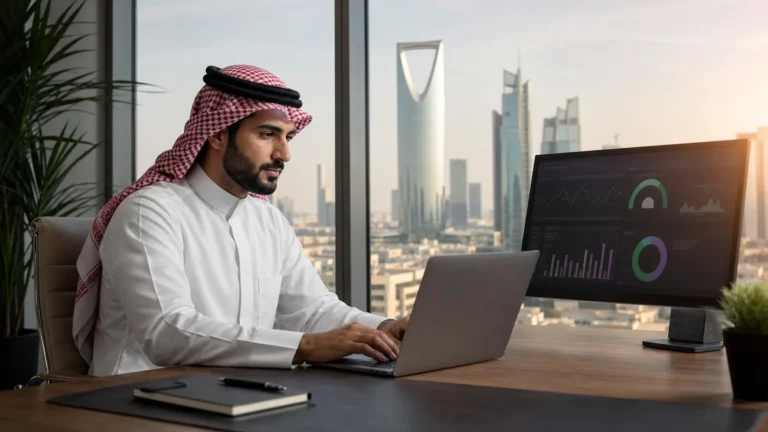

Why Gulf Visitors Leave Your Website in Seconds — and How to Make Them Stay
Your site ranks on page one. Visitors click. They land on your page, glance around, and leave within ten seconds. This is a high bounce rate — and Google notices. When searchers consistently bounce back to the search results after clicking your page, Google interprets it as a signal that your page did not answer their question. Rankings drop. Here is how Gulf businesses fix this.
“Bounce rate is not just a metric. It is Google watching what happens after someone clicks your result — and adjusting your rankings accordingly.”
The Three Reasons Gulf Visitors Bounce
1. Your page loads too slowly. Gulf consumers have fast mobile networks and zero patience. If your page takes more than three seconds on a phone, they leave. Fix: compress images, use a CDN with Gulf edge nodes, minify code. Learn how to speed up WordPress. 2. Your content does not immediately answer the question they searched. If the first paragraph is generic and the answer is in paragraph seven, they leave. Fix: put the answer in the first two paragraphs. 3. Your site is not mobile-friendly. Over 70% of Gulf searches are on phones. If they have to pinch and zoom to read, they leave. Fix: responsive design, readable font sizes, touch-friendly buttons.
Engagement Tactics That Lower Bounce Rate
Add an FAQ section to key pages — visitors who find their specific question and answer engage longer. Add internal links to related content — give visitors somewhere to go next. Add a clear, relevant call to action — not “Contact Us” but “Get a quote for this service” or “See examples of our work.” Add an AI chatbot that greets visitors and asks what they need — engagement starts immediately. For content that keeps visitors reading, see our SEO articles.
“A visitor who stays on your site for two minutes and reads two pages is worth ten visitors who bounce after eight seconds. Google knows this. Your content should too.”